

Shibuya City, Tokyo (walking version) (Japanese page)
Publishing street litter trends over the years
Has surveyed the same route four times a year since FY2022. Found that about 40% was tobacco, and published the results on the city website.

Just film with a smartphone. AI counts litter and illegally dumped waste on the road and puts it on a map. Knowing where litter is and how much helps you target countermeasures and measure their effect. Takanome is used for illegal dumping patrols, checking the effect of smoking areas and more efficient cleanups.
These are common concerns from local governments and companies.
Only about 9% of municipalities in Japan measure the amount of littered waste (Ministry of the Environment survey on littering, FY2023). Many take action without measuring the effect. Without measuring, there is no improvement. Start by measuring.
Local governments
Place a smartphone in an official car or a partner company's vehicle. It detects illegal dumping while driving and shows it on a map. This patrol saves budget and time and is used in places such as Fukuoka Prefecture.
Local governments, tobacco-related companies
Count litter before and after adding or removing smoking areas or bins, using the same measure. In a Shibuya City survey, about 40% of street litter was tobacco. The data is used to decide where to put smoking areas and to explain to councils and residents.
Local governments, cleanup groups
When volunteers were guided to places with more litter, the amount collected tripled (Yamaguchi Prefecture). Gifu Prefecture uses litter maps to help cleanup groups choose where to clean. Measuring before and after cleanups shows results in numbers. It can also work with the Pirika litter-picking app.
Companies (waste, logistics, transport, security)
Survey during daily driving in delivery trucks, collection trucks, buses and taxis. There is no extra work for drivers. Sharing the data with local governments builds ties with the community.
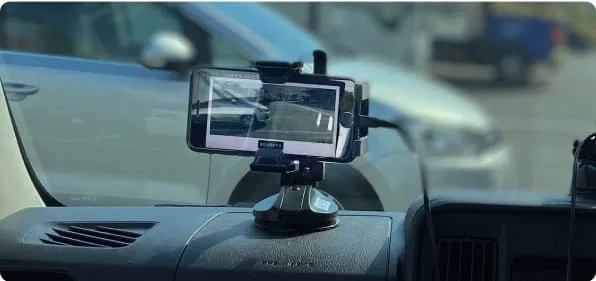
Film the road with a special smartphone lent by Pirika. Just place it in a car, or film while walking.
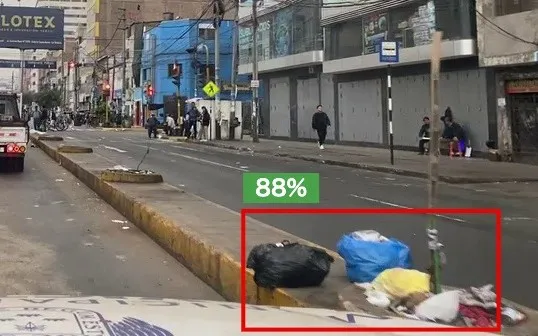
Takanome AI, developed by Pirika, finds litter in the video. People and vehicles are blurred automatically right after filming.
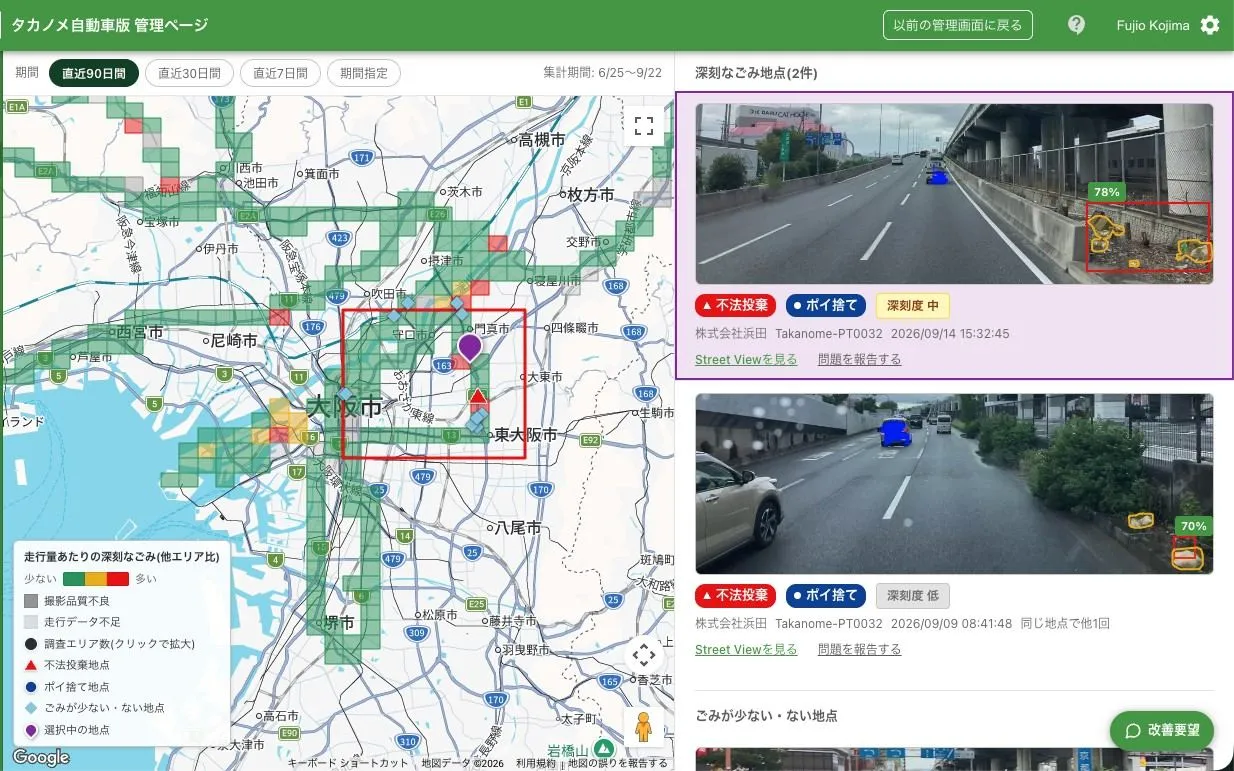
You get a heat map that shows where litter is concentrated, and a report. You can also check the dashboard.
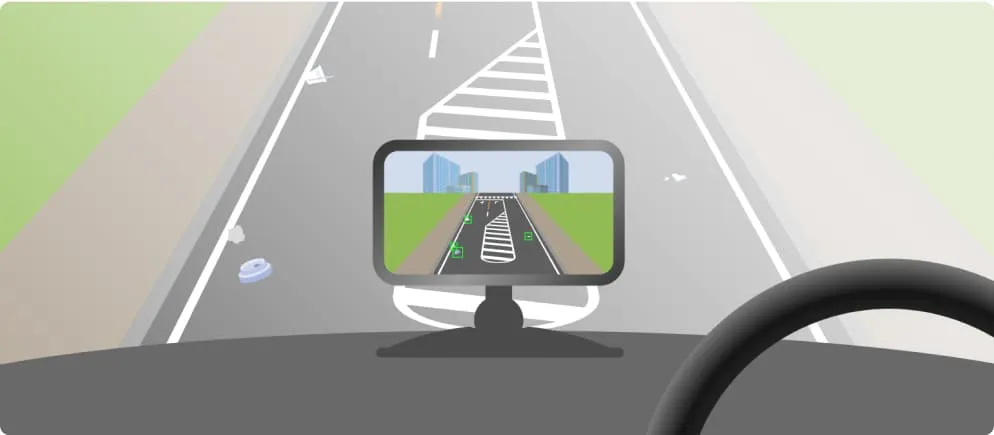
Just drive with a smartphone in the vehicle to see litter and illegal dumping over a wide area.
Best for
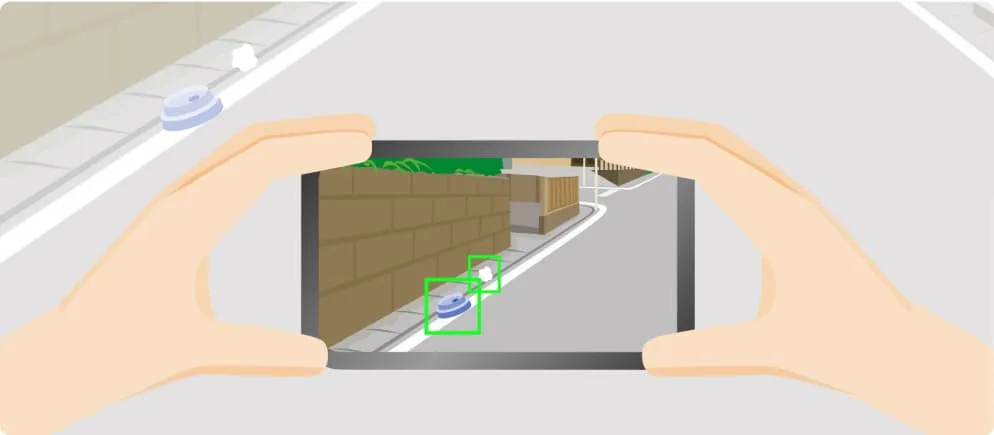
Walk and film places cars cannot enter, such as areas around train stations and shopping streets, and count litter by type in detail.
Best for
The Ministry of the Environment of Japan's guideline for surveying littered waste (June 2021) describes a method for wide areas: reading the types and amount of litter from smartphone images and showing them on a map. Takanome surveys this way.
Shibuya City, Tokyo (walking version) (Japanese page)
Has surveyed the same route four times a year since FY2022. Found that about 40% was tobacco, and published the results on the city website.
Gifu Prefectural Office (car and walking versions)
Shared with cleanup groups to help them choose where to work. Surveys after cleanups show the effect.
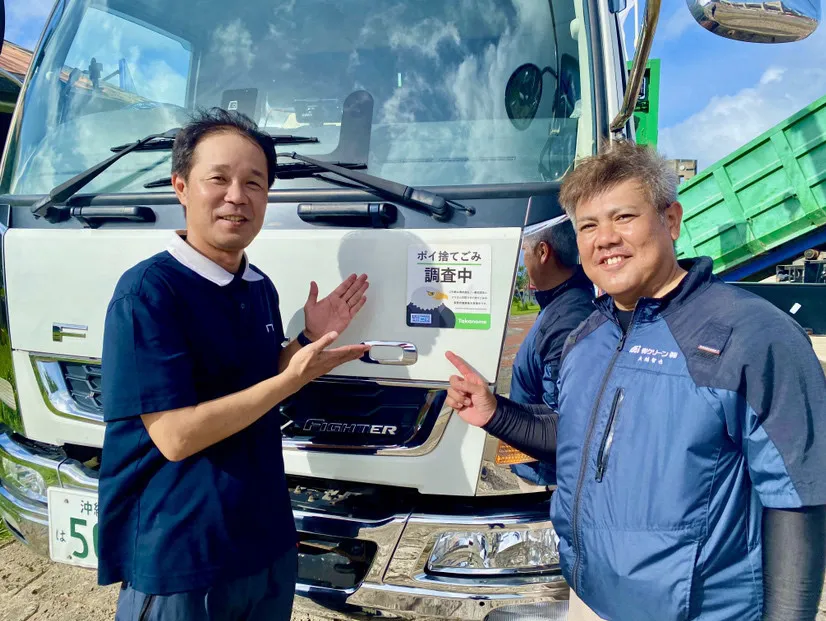
Machi Clean Co., Ltd. (car version) (Japanese page)
The first in Okinawa Prefecture to put Takanome on waste collection trucks. They map street litter during their daily rounds.
Yamaichi Shoji Co., Ltd. (car version)
A special container truck with Takanome. It raises driver awareness and supports community cleanup work.
In an online meeting of about 30 minutes, we sort out what you want to know and who will use it for what. Feel free to ask even if you do not yet know what to survey.
You decide the area (distance), the number of surveys, and whether Pirika or your team films. We then send a quote.
We provide templates for specifications and contracts. We can also give you a checklist on handling personal information.
Pirika lends the equipment (special smartphone and car holder). With an instruction video and a help desk, it takes very little effort from your staff.
We deliver the report about 1.5 months after the survey day, and hold a briefing if needed. We can also help publish the results and prepare material for councils.
Used mainly by companies with vehicles, such as waste, logistics, transport and security companies. Data collected during regular driving builds ties with the community and supports your PR.
Just place a smartphone in the car. Filming starts automatically when you drive. Nothing is shown on the screen, so it does not distract the driver.
You can share the litter distribution data with local governments in your service area. It can lead to joint cleanups and better ties with the government.
Includes a press release at launch, media outreach, support during interviews and vehicle stickers. Over 80% of companies were featured on TV within a year of starting.
Executive / person in charge
No extra work, easy to continue
We only set up a smartphone, so it was easy to keep going. Now everyone can take part in social good activities.
Driver
Safer driving awareness
Nothing is shown while filming, so it does not get in the way of driving. Knowing we are being filmed makes us drive more safely.
Driver
Customers praised us
Customers who saw the sticker said, "This is a good activity." We now notice litter on the ground naturally.
People and vehicles are blurred in the app right after filming. Video is encrypted and can be read only through the app. If a device is stolen or lost, its data can be erased remotely. Only Pirika staff and the client's administrators can view the data. If results are published, only litter distribution maps are shown. Survey vehicles carry a sticker showing the purpose of the survey and who is responsible.
The car version detects litter the size of a plastic bottle or larger, and piles of illegal dumping, from driving video. You can tune it to miss fewer items or to reduce false detections, depending on your goal. For finding illegal dumping, we use a setting that misses less (Fukuoka Prefecture). The walking version sorts even small litter, such as cigarette butts, into 30+ types.
Results of a single survey can vary with the day of the week and the weather. To check the effect of smoking areas or bins, we suggest 3 surveys before and 3 after (6 in total), based on advice from a university expert. To learn the current situation, you can start with one.
For the walking version, you can choose Pirika surveyors or your own staff (we lend the equipment). An experienced surveyor can film about 2 km an hour. We suggest filming in the morning, when daytime cleanups have less effect. The car version films during regular driving. Night filming is not recommended.
Filming is done while moving on sidewalks and roads as usual, so a road use permit or road occupancy permit under Japan's Road Traffic Act is not needed. For places that need the owner's permission, such as private roads, please talk to us in advance.
About 1.5 months after the survey day, we deliver a PDF report with the heat map, pieces per 100 m, breakdown by type, comparisons and suggested countermeasures. With the car version, you can check the distribution on the dashboard at any time, and embed it in the local government's visualization page.
With the car version, just place a smartphone in an official or partner vehicle, and the survey goes on during daily work. Filming starts and stops automatically when it senses driving. We provide an instruction video and a help desk.
Yes. Using examples from other local governments and companies, we help you sort out what to measure to support your next decision. We can also share examples from similar-sized municipalities or the same industry.
Feel free to contact us even if your survey goal is not clear yet.
Pirika offers environmental services, from litter collection and surveys to recycling.
A platform that promotes litter picking
Used in 137 countries and regions, with over 470 million pieces of litter collected. Pirika makes cleanups by individuals, governments and companies visible and easier to join.
Current page
Litter distribution survey
AI analyzes road videos to survey littering and illegal dumping. It measures the effect of countermeasures and suggests improvements to keep towns clean.

Surveys, pollution control, business support
Pirika consultants provide environmental surveys, pollution control and support for environmental businesses, tailored to each client.
Turning litter and beach waste into resources
We develop technology and businesses to recycle plastic and other waste that was hard to recycle before.
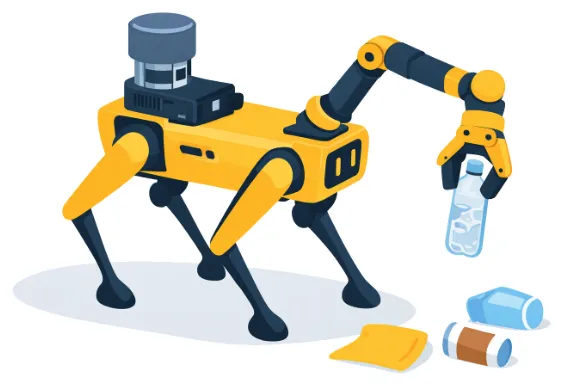
Automating beach litter cleanup
Robots make collecting and carrying litter washed ashore more efficient. We also accept requests to exhibit them at environmental events.
Pirika, Inc. works to solve environmental problems, starting with litter leaking into nature. Its purpose is to overcome every environmental problem through science and technology. Pirika runs the Pirika litter-picking app (used in 137 countries and regions, with over 470 million pieces of litter collected), the AI litter survey Takanome, and services in consulting, recycling and robotics.